
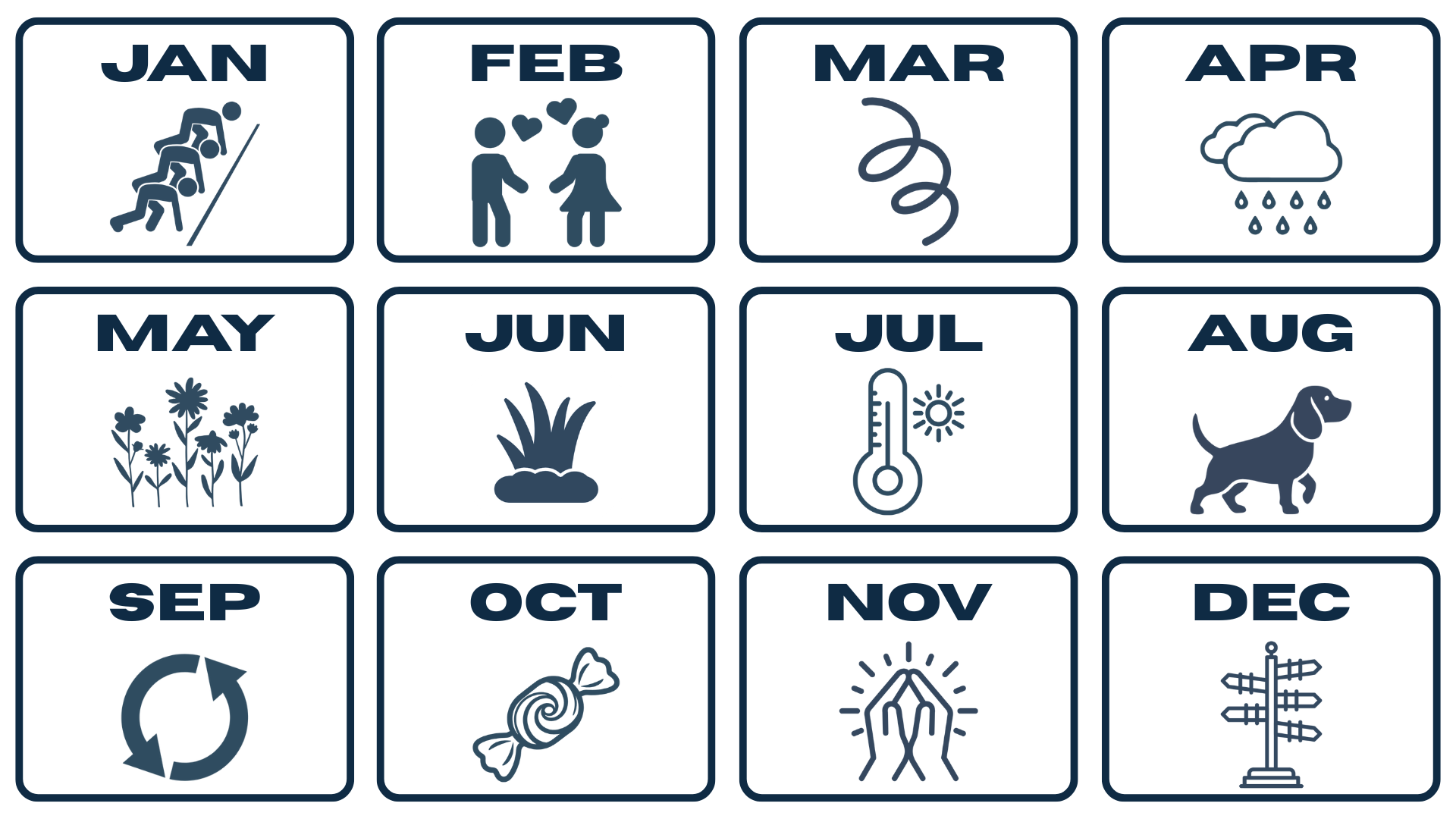
2025 | A Year in Review
As we close out the year, it’s a natural time to reflect on the events that shaped the markets and the broader economy. From shifting monetary policy to moments of heightened volatility and resilience, 2025 reminded investors that the markets have their up and downs, even in a year where we finish in a positive position. Below is a month-by-month look at the key themes and developments that influenced markets throughout the year.
January
 "Fresh Starts"
Markets opened the year cautiously following late-2024 volatility.
Economic data showed stronger job growth and resilient consumer spending as inflation remained elevated.
Investors focused on inflation dynamics and potential Federal Reserve actions.
February
 “Flirty Signals”
Early earnings results beat expectations in key sectors like technology and healthcare, lifting sentiment.
Labor markets remained tight, fueling speculation on the timing of future rate moves.
Inflation readings showed mixed signals, keeping markets attentive to incoming data.
March
 “Springing Into Action”
Stocks gained ground as optimism grew around economic resilience.
Consumer sentiment slipped in parts of March, highlighting uneven confidence trends.
Markets awaited key indicators on jobs and inflation to shape the policy outlook.
April
 “April Showers”
Tariff announcements and policy uncertainty triggered increased market volatility.
On April 2, broad new tariff policies were announced, sparking sell-offs in stocks.
Later in the month, certain tariff plans were paused, lessening immediate downside risk.
May
 “May Flowers”
A bounce-back took hold as markets recovered early losses.
Major equity indices showed renewed strength into late spring.
Investors weighed inflation progress and monetary policy expectations.
June
 “June Shoots”
Markets extended gains in the first half of June, with strong performance across major benchmarks.
Historical comparisons noted one of the best May–June stretches for stocks.
Volatility remained a background theme despite solid advances.
July
 “Heating Up”
Corporate earnings broadly exceeded forecasts, lifting market sentiment.
Consumer spending held up well, supporting economic growth narratives.
Inflation pressures showed tentative signs of moderating.
August
 “Dog Days”
After July’s gains, markets saw some consolidation and modest pullbacks.
Yield curves and rate markets began to price in slower economic growth.
Central bank statements hinted that easing might be gradual.
September
 “Seasonal Reset”
September delivered typical volatility, particularly in tech and growth names.
Labor market concerns grew, and Fed expectations shifted.
Markets reacted to mixed economic signals as data releases were disrupted by a federal government shutdown.
October
 “Harvesting Stability”
A divided Federal Reserve cut rates late in the month, easing financial conditions.
Mixed data complicated the outlook but markets generally welcomed policy support.
Investors began positioning for end-of-year themes around holiday spending and corporate guidance.
November
 “Giving Thanks for Gains”
Markets rallied on optimism that economic data remained solid despite cooling trends.
Stocks responded positively to easing monetary policy expectations and resilient third-quarter GDP growth.
Healthcare and defensive sectors performed well, while other sectors showed rotation.
December
 “Year-End Crossroad"
Markets navigated year-end volatility as investors reacted to economic data and Federal Reserve messaging.
The Fed capped the year with another interest rate cut, signaling a more supportive stance as growth showed signs of cooling.
Investors looked ahead to 2026 with cautious optimism, balancing easing policy against lingering inflation and economic uncertainty.
While headlines and short-term market movements can feel unsettling, 2025 reinforced an important truth: markets adapt, economies evolve, and long-term discipline matters. As we look ahead to 2026, staying focused on goals, maintaining diversification, and keeping perspective will remain essential. If you have questions about how these trends may impact your financial plan, we’re here to help guide the conversation.
Check Out Our Recent Article on Cybersecurity Talk to an advisor today